Thoughts On Gold From Austin
The stock market collapsed yesterday with the Dow Jones suffering the largest point drop in its history-over 1,000 points-this following a sharp decline Friday.
While the drop was not as severe in percentage terms, the previous record was a 778-point drop during the financial crisis of 2008 following the failure of numerous financial institutions.
We are not sure if stocks will continue falling at this point, but the market's increasing volatility reminds us of the importance of financial insurance. Since 1970, every time the S&P 500 has declined 10% or more during a year, gold has risen in value.
But beyond the turbulent stock market, we believe there is a more important reason to be optimistic about gold at this point.
1. The most important reason to be bullish on gold right now.
As the nation recovered from the financial crisis, a surge in debt-driven spending drove the federal deficit to a colossal one trillion dollars for the first time, 10% of GDP (vs. a "normal" level around 3%). This prompted gold, already accelerating to the upside in 2010, to explode to an all-time high above $1,900 in September of 2011. (Nothing moves gold like the prospect of national bankruptcy, which government is forced to evade via recession-provoking spending cuts or by borrowing even more.) However, by that time it was becoming clear we had dodged the iceberg: government finances were on the mend as the economy began recovering along with the stock market and gold began to settle down. Today, the prospect of a trillion-dollar deficit is on the table this year-even before tax cuts kick in-thanks to projected spending on Hurricanes Harvey, Irma, and Maria and California wildfires among multiple Democrat and Republican pet projects. (See, for example, USA Today's article, "Deficit Could Hit $1 Trillion in 2018, and That's Before the Full Impact of Tax Cuts".) $20 trillion in debt, a potential trillion-dollar deficit, and another government shutdown fight this month-and that's with economic growth looking stronger than it's been in years. Not surprisingly, the price of financial insurance started the year above $1,300/oz.
2. If you believe inflation is finally going to rear its head, few investments look more attractive than silver.
Every adult reading this has seen three financial bubbles in their lifetimes: the dot-com stock bubble of the 1990s, the housing bubble of the 2000s and now what is being regarded as the "everything bubble"--what we are living through today. Stocks are at the most expensive level in financial history since the 1929 and dot-com peaks. Bonds around the world are by far at their highest and real estate values are at extremes around the world. Global government debt of $152 trillion is at the highest level relative to GDP in world history, as the IMF has reported.
What happens next is anybody's guess, but what does this mean for gold?
When the dot-com bubble was bursting, gold was trading near $250 and rose six-fold over the next 11 years. When the housing bubble popped and the global stock market crashed in 2008, the world's largest bank, Royal Bank of Scotland, and AIG, the largest insurance company, collapsed into insolvency. All of
this caused gold to rise 5% that year. Thousands of years of financial history don't lie: when bubble dreams pop and people come back to financial earth, they buy gold. What is interesting about today's everything bubble is that even with the skyrocketing stock market boom, gold was up 12% in 2017. Perhaps we shouldn't be surprised: investors have seen this movie before.
3. The Japanese yen is signaling that a Currency War could be coming back (the one that gold always wins).
Let's forgive the senator (does it matter from what party?) who wouldn't vote for any tax cut that would "add one penny to the deficit." He was just making pre-vote conversation and is smart enough to know that the $1.4 trillion added to the deficit times 100 is a bit more than one penny and, besides, we all want the government to have less of our money. Clearly, the tax cut will have some benefit and jobs will be created. Government can worry about money later. But the
bond market is acting as if we might be going into recession. When the difference between long-term and short-term interest rates starts to decline (what is regarded as the "yield curve"), Wall Street starts to pay attention. Today, after falling steadily for years, the yield curve is now at the level it was in 2007. The decline actually intensified after the tax cut and the yield curve is now rapidly approaching inversion levels. This is something to continue watching:
An inverted yield curve has predicted the last seven recessions dating back to the 1960's.
If you're looking to acquire gold or silver, b
elow you'll find some of the best deals we are seeing this month. Premiums on this material, particularly gold, are the lowest we've seen in many years, offering solid value for those looking to acquire physical precious metals.
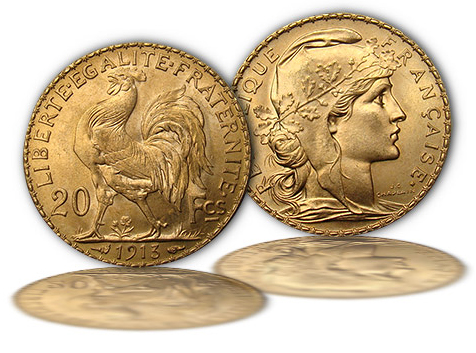
Best Buy in Fractional Sized Gold Coins:
Tiered-Pricing Available
Lower cost per ounce than modern-minted ¼ ounce Gold American Eagle coins!
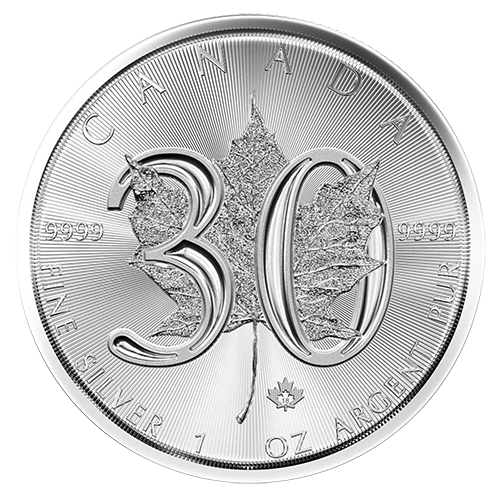
If you're thinking about buying silver now, you should have a look at this brand-new release from the Royal Canadian Mint:
Great Buy in Silver Bullion Coins:
Limited Mintage of only 250,000-just 500 cases
Offered as singles, rolls of twenty-five, or sealed cases of 500 coins
As always, save 3% when using a check or bank wire.
If you're thinking about a significant buy given current market conditions, be sure to call
1-800-928-6468 for preferred pricing and quantity discounts.
Order Yours Online or Call us at 1-800-928-6468
Copyright © 2018. All Rights Reserved.
|
|
|
|
| |
|
|