I
n 2000, it was the tech bubble that derailed the stock market, although the economy suffered only a mild recession. At the time, gold was around $250 and began climbing as stocks fell. Then, interest rates were slashed making way for the next bubble, this time in the housing market. We all remember when the housing market crashed years later, taking the stock market and economy with it. The banking system nearly collapsed and Lehman Brothers became the largest bankruptcy in U.S. history in 2008. Finally, after all this, the price of gold crossed the $1,000 per ounce threshold.
As we inevitably enter the next economic downturn, consider where we are in relation to past recessions:
- The national debt is trillions higher than the were at the end of the last two booms.
- With the tax cuts, the deficit is likely to cross a whopping $1 trillion within the next year.
- The Fed has less tools to use now: interest rates (which the Fed can cut when the economy weakens) are far lower than at the end of the last two booms.
- Real estate (2006, 1927 and today) generally starts to show signs of distress well ahead of stock market declines.
Gold is down 8% this year and is showing signs of stabilizing around $1200. This offers a compelling entry point for those looking to add to or begin accumulating precious metals like gold and silver.
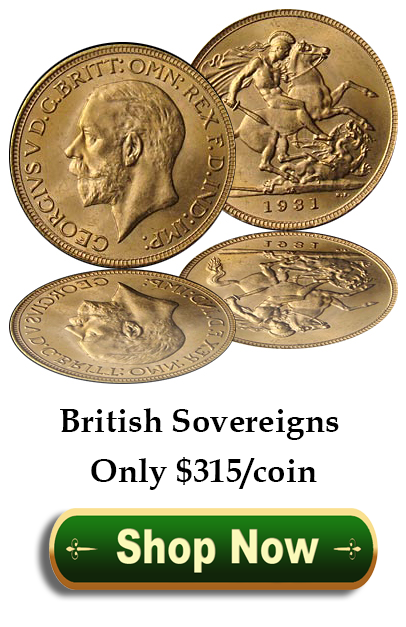
To help you take advantage of today's gold prices, we have
British Sovereigns
and
French 20 Francs
at special any-quantity pricing. Call 1-800-928-6468 to lock-in orders and as always, save 3% with checks or wires. As always, thank you for your business.