|
Oil sits at the foundation of the global economy. Right now, oil is telling a story of extreme uncertainty.
Heading into March, crude traded around $67 per barrel. Then tensions with Iran escalated. The Strait of Hormuz, the narrow waterway through which roughly 20% of the world’s oil supply passes, effectively shut down. Within days, oil surged past $100 and briefly touched nearly $120 per barrel as recently as March 9th.
On Tuesday, prices pulled back into the mid-$80s after President Trump signaled the conflict could wind down and the G7 began preparing emergency releases from strategic oil reserves.
A move from $67 to $120 and back below $90 in less than two weeks is the definition of volatility. Markets do not handle uncertainty well, and that is exactly what we are experiencing now. The Dow opened one recent session down more than 1,000 points before closing in positive territory the same day. Equity investors are being whipsawed.
At the same time, the direction of the conflict appears to be evolving. Iran’s strategy has shifted toward targeting civilian infrastructure such as oil storage facilities and utility systems rather than purely military objectives. The aim seems about creating economic disruption more than anything. That dramatically widens the range of potential outcomes and makes the duration of any disruption far harder to predict.
Adding to the unease, last Friday’s jobs report showed the U.S. economy lost 92,000 jobs in February. Economists had expected a gain of 59,000. It was the weakest reading in four months. Unemployment rose to 4.4 percent, while December’s numbers were revised lower as well – from a gain of 50,000 to a loss of 17.000. The labor market, which had appeared to stabilize earlier this year, is softening again. That puts the Federal Reserve in a difficult position. Rising oil prices increase inflation pressure and argue against cutting rates. A weakening labor market pushes in the opposite direction. The Fed meets March 17 and 18, and markets widely expect policymakers to hold rates steady in the current 3.50 to 3.75 percent range.
In the middle of all this, precious metals have quietly found their footing. Gold appears to be settling into a trading range near $5,200 following its own volatile run. Silver, which surged through $100, then $110 and briefly $120 earlier this year before correcting, now appears to be consolidating in the $85 to $90 range. On Tuesday, silver pushed back above $88, gaining more than 6 percent on the session.
What we are seeing from our clients is telling. Fewer holders are selling into the market right now. That pattern often emerges when investors believe a pullback is temporary and that the broader trend remains intact.
Meanwhile, demand in Asia continues to tighten the physical market. The Shanghai exchanges are still paying significant premiums for physical metal, drawing supply from Western vaults in Chicago and London. COMEX registered silver inventory, the metal actually available for delivery on futures contracts, has fallen to only 78 million ounces. That is a fraction of what it was only a few years ago.
When buyers overseas are willing to pay more per ounce above Western prices to secure physical silver, it says something about where genuine demand is headed.
At the same time, premiums on physical silver products have come down meaningfully from earlier this year. That combination of lower premiums and a consolidating spot price is creating what we see as a compelling window.
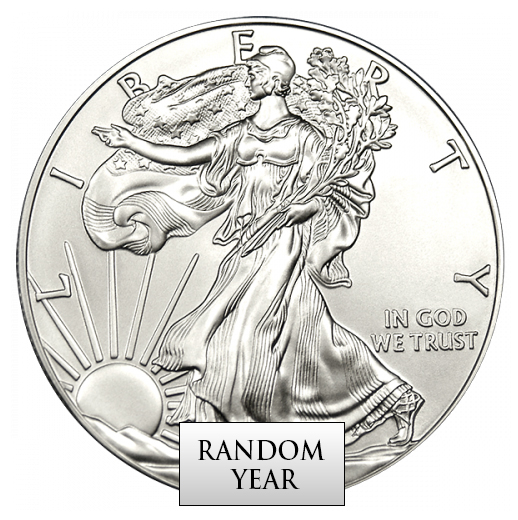
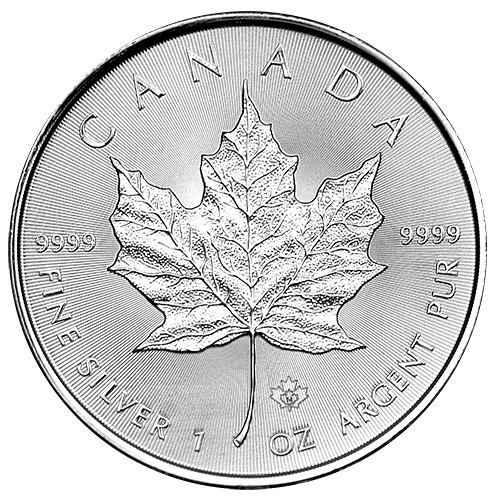
Products such as 2026 American Silver Eagles, Random-year American Silver Eagles, and Canadian Maple Leafs are currently available at some of our most attractive prices in months. For investors looking to start building a position or add to an existing one, opportunities like this do not tend to last long. (continues below)
|